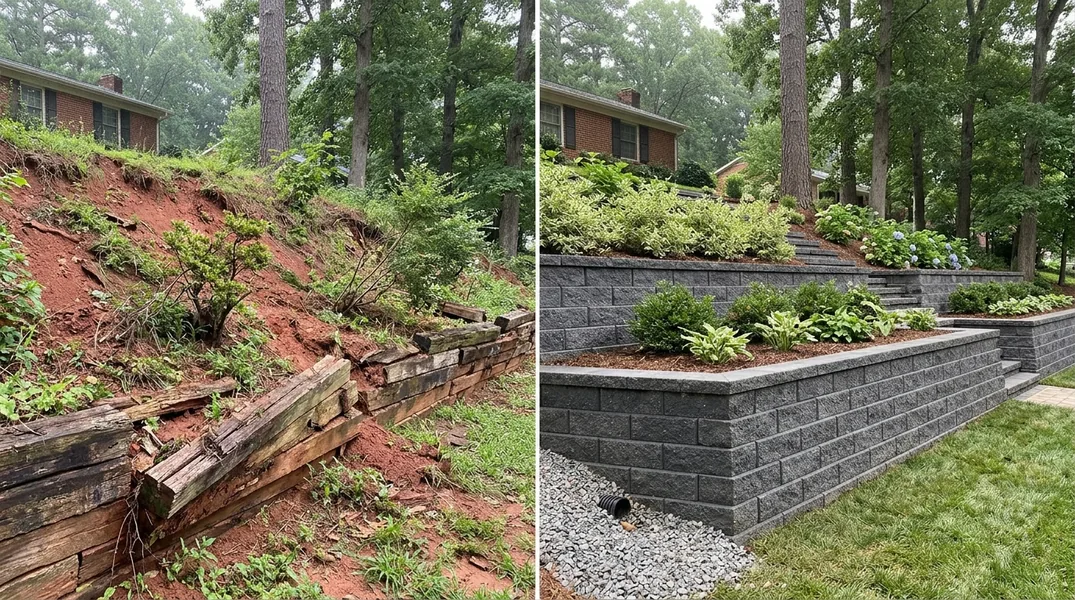
Do You Need a Permit for a Retaining Wall in Greensboro?
If you are planning a retaining wall project in Greensboro, one of the first questions you will face is whether you need a permit. The short answer is: it depends on the height of the wall and where it sits on your property. Most homeowners are surprised to learn that a relatively short wall can still trigger permitting requirements, especially if it is holding back soil near a slope, a driveway, or a property line. Understanding the local rules before you dig is the best way to avoid fines, forced removal, or problems when you sell your home.
In general, retaining walls that are 4 feet tall or less are often exempt from building permits in many North Carolina jurisdictions, but that is not a blanket rule. The 4-foot retaining wall permit exemption typically applies only when the wall is not supporting a structure, not impounding water, and not located in a flood zone or critical area. Walls taller than 4 feet almost always require a permit and engineered plans. Because Greensboro follows local zoning and building code requirements that can change, it is smart to verify your specific situation with the city's planning or inspections department before ordering materials.
Retaining Wall Height Limit and the 4-Foot Rule Explained
The phrase "retaining wall height limit" gets thrown around a lot, but it rarely means a single number for every property. In practice, the height limit depends on what the wall is doing and where it is placed. A garden wall that holds back a small terrace is treated very differently from a wall that supports a driveway or protects a foundation. Many codes use 4 feet as the threshold where permits and engineering start to become mandatory, measured from the bottom of the footing to the top of the wall. If your wall is close to that threshold, measure carefully and account for any buried portion.
There is also the matter of tiered or terraced walls. Homeowners sometimes assume that building two 3-foot walls instead of one 6-foot wall avoids the permit. That is not always true. Many jurisdictions look at the total retained height and the distance between tiers, and closely spaced walls may be treated as a single structure. If you are unsure whether your design crosses the line, a professional assessment is worth the peace of mind. Our team handles Retaining Wall Installation throughout the area and can help you understand what your project will require before any work begins.
What Happens If You Skip the Permit?
Skipping a required permit might feel like a way to save time and money, but the risks usually outweigh the short-term convenience. If a wall fails or causes damage to a neighbor's property, an unpermitted structure can complicate insurance claims and leave you financially exposed. Code enforcement can also require you to remove or rebuild the wall at your own expense, which turns a modest project into a much larger one. When it comes time to sell, buyers and their inspectors often ask about permitted work, and an unpermitted retaining wall can delay or derail a closing.
There is also the safety factor. Retaining walls fail when drainage, soil conditions, or structural design are inadequate, and those are exactly the details a permit review and inspection are meant to catch. A wall that looks fine for a few seasons can lean, crack, or collapse after heavy rain. If you already have a wall showing signs of trouble, Retaining Wall Repair can address the problem before it becomes a hazard. In some cases, a full Retaining Wall Replacement is the safer and more cost-effective path, especially if the original wall was never permitted or engineered.
How the Permit Process Works for Greensboro Homeowners
The permit process itself is usually straightforward when you know what to expect. You or your contractor submit an application with a site plan showing the wall location, dimensions, and materials, along with details about drainage and grading. For walls above the exemption threshold, you may also need engineered drawings stamped by a licensed professional. The city reviews the application, may ask for revisions, and then issues the permit. Inspections typically happen at specific stages, such as after the footing is installed and again at final completion.
One of the most common delays comes from incomplete submittals, particularly missing drainage details or unclear property line information. A professional installer who works in the area regularly knows what reviewers look for and can prepare a package that moves through the process smoothly. If you want to understand what your project might involve from a pricing standpoint, including permit-related costs, we are happy to walk you through it. You can also reach us at (336) 203-7877 to discuss your specific site.
Retaining Wall Installation Near Me: When to Call a Pro
Some small landscaping walls are genuinely DIY-friendly, but the moment a wall retains significant soil, supports a load, or sits near a slope or structure, professional involvement is wise. A pro will evaluate soil conditions, calculate the right footing depth, and design drainage that directs water away from the wall. Those details are not optional extras; they are what keep a wall standing through seasons of freeze and thaw, heavy spring rains, and summer heat. A properly built wall also protects your landscaping investment and your home's foundation.
If you are searching for retaining wall installation near me in the Greensboro area, look for a contractor who is familiar with local permitting and can show you examples of similar projects. We install a range of systems, including Concrete Retaining Walls that offer long-term durability and low maintenance. Whether you need a short garden wall or a taller engineered structure, the first step is a conversation about your site and goals. Request a free estimate and we will help you sort out the permit question and the design at the same time.
Local Considerations for High Point, Winston-Salem, and Burlington Homeowners
Permit rules can vary from one city to the next, even within the same region. Homeowners in High Point, Winston-Salem, and Burlington should confirm the requirements with their own local building department rather than assuming Greensboro's rules apply. Height thresholds, setback requirements, and engineering triggers can differ, and the last thing you want is to build a wall that complies in one jurisdiction but not in yours.
Regardless of where you are located, the fundamentals stay the same: know your wall height, understand what it is retaining, and confirm whether a permit is required before breaking ground. A brief call to the local inspections office or a conversation with an experienced installer can save you significant time and expense. If you are unsure where to start, contact Greensboro Retaining Wall at (336) 203-7877 and we will point you in the right direction for your property.
Looking for a professional retaining wall contractor in Greensboro? Greensboro Retaining Wall responds fast for all your retaining wall needs.
Get a Free QuoteOur services: Retaining Wall Installation · Retaining Wall Repair · Retaining Wall Replacement