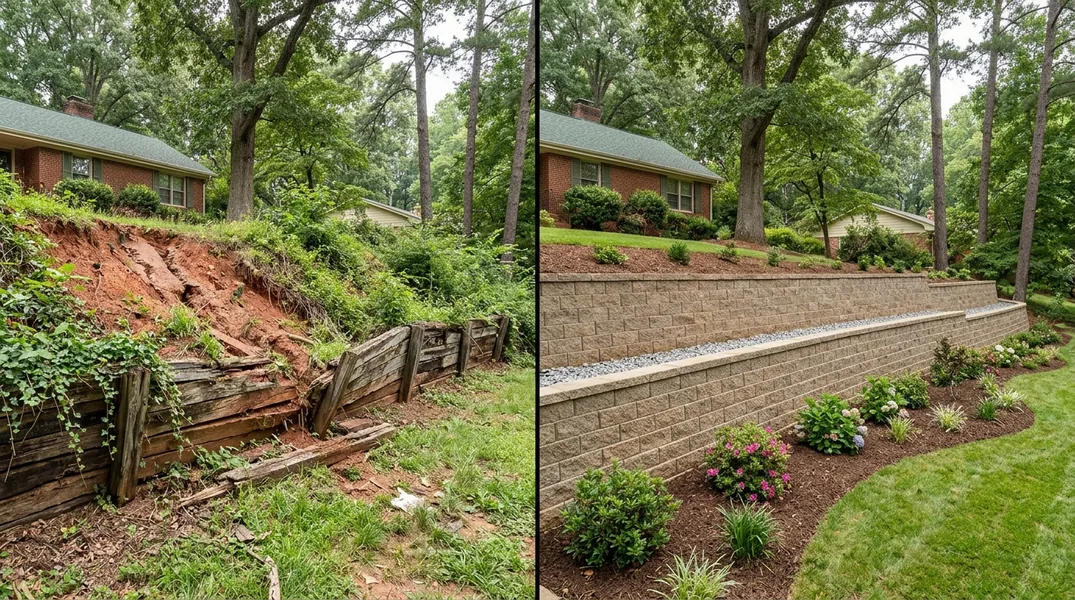
Why Retaining Walls Lean in Triad Yards
A leaning wall is one of the most common calls we get from homeowners across Greensboro. The cause is almost always the same: water. When soil behind a wall becomes saturated, it adds tremendous weight and pressure. If the wall lacks proper drainage, that pressure has nowhere to go but forward, and the face of the wall begins to tilt. The heavy clay soils common in the Triad make this worse, because clay holds water and expands rather than letting it drain away quickly.
Other factors can contribute as well. Tree roots can push against the back of a wall, frost heave in a cold snap can shift blocks, and a wall that was built without a proper footing or geogrid reinforcement may simply never have had the structural strength to hold back the load. Understanding which of these is at play is the first step in deciding whether you are facing a repair or a full rebuild. A small lean caught early is often fixable, while a wall that has moved several inches and shows horizontal cracking usually points toward replacement.
Signs You Can Repair a Leaning Wall
Not every lean means the wall is finished. If the movement is minor, meaning an inch or two of tilt at the top, and the block faces are still tight with no wide gaps, Retaining Wall Repair is often the smart, cost-effective choice. The goal is to relieve the pressure that caused the lean and stabilize the structure before it gets worse. That usually means correcting the drainage behind the wall, adding weep holes or a French drain, and re-seating or re-anchoring the affected sections.
Crack repair is a related fix. Hairline cracks in mortar or small separations between blocks can often be sealed and reinforced, especially on Concrete Retaining Walls that are otherwise sound. The key is catching it early. A wall that is still mostly vertical but has a drainage problem is a great candidate for repair, and addressing it now can add years to its life. If you are unsure which category your wall falls into, a professional inspection is worth the time.
When Replacement Is the Only Safe Option
Some walls are past the point where patching makes sense. If the wall has leaned more than a few inches, if you can see a noticeable bulge or bow in the middle, or if there are long horizontal cracks running along the face, the structural integrity is likely compromised. In those cases, Retaining Wall Replacement is the safer and more durable answer. Trying to repair a wall that has already failed structurally often just delays the inevitable and can put your yard, driveway, or home at risk.
Another sign is age combined with poor original construction. A wall built without geogrid, proper base material, or adequate drainage was never going to last, and rebuilding it correctly is the better investment. During replacement, we can also improve the design so the new wall handles water properly from day one. Homeowners in High Point and nearby communities face the same clay soil challenges, so the fix is the same: build it right the first time. If you are weighing your options, a free estimate will give you a clear picture of what your wall needs.
Retaining Wall Repair Near Me: How to Choose a Local Pro
When you search for retaining wall repair near me, you want someone who understands local soil and drainage, not a general handyman who will just patch the surface. A proper assessment looks at the wall's height, the load it carries, the drainage behind it, and the condition of the footing. That is the difference between a fix that lasts and one that fails again after the next heavy rain. Ask any contractor how they plan to address water management, because that is the root cause in most Triad walls.
It also helps to work with a company that handles both repair and replacement, so you get an honest recommendation rather than a sales pitch for one service. At Greensboro Retaining Wall, we serve homeowners throughout Winston-Salem and the surrounding area, and we will tell you plainly whether your wall can be saved or should be rebuilt. Call (336) 203-7877 to talk through what you are seeing, or reach out online to schedule a visit.
What Repair or Replacement Costs in Greensboro
Homeowners always want a number, and the honest answer is that it depends on the wall. A targeted repair, such as fixing drainage and re-seating a few blocks, is typically far less expensive than a full rebuild. Replacement costs scale with wall length, height, material choice, and site access. A short garden wall is a very different project from a tall structural wall holding back a slope near a driveway. Because of that, any responsible contractor will want to see the wall before quoting a firm figure.
You can review general pricing guidance on our site to get a sense of ranges, but treat it as a starting point rather than a final number. The best way to know what your project will cost is to get an on-site assessment. We are happy to walk your property, explain what we see, and give you a clear written estimate with no pressure. Whether you are in Burlington or right here in Greensboro, the process is the same and the goal is a wall that stands straight for decades.
Don't Wait for a Small Lean to Become a Big Problem
A leaning wall rarely fixes itself, and the longer you wait, the more likely a repairable issue turns into a full replacement. Water is patient, and every heavy storm pushes a weak wall a little further. If you have noticed a tilt, a bulge, or new cracks, the smart move is to get it looked at now while repair is still on the table. Early action is almost always the cheaper path.
Greensboro Retaining Wall is a local company that handles everything from Retaining Wall Installation to repairs and full rebuilds. We know the soils, the weather, and the drainage challenges that Triad homeowners deal with. Reach out for a free estimate or call (336) 203-7877, and let's get your wall back to doing its job.
Looking for a professional retaining wall contractor in Greensboro? Greensboro Retaining Wall responds fast for all your retaining wall needs.
Get a Free QuoteOur services: Retaining Wall Installation · Retaining Wall Repair · Retaining Wall Replacement